
Retail

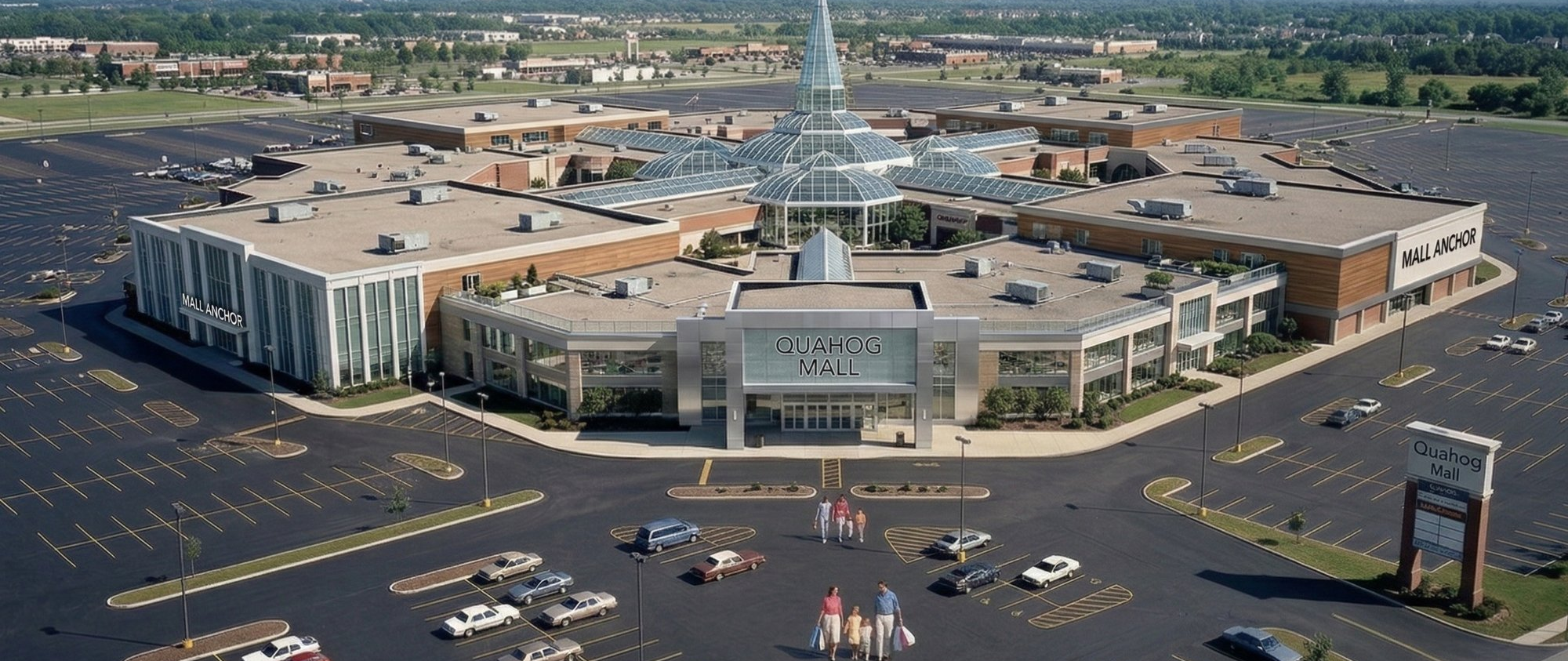
U.S. developers massively overbuilt malls and shopping centers over the ≈30 year period starting in the 1970’s. By 2010, The Great Financial Crisis and emergence of e-commerce were driving retail store closures across the country as investors raced for the doors, driving cap rates up into the double digits for previously (and subsequently) desirable assets, creating tremendous opportunities for grounded, analytical, and courageous investors.

American consumers defied predictions and continued shopping in person, as physical retail still accounts for approximately 84% of the $7.4 trillion U.S. retail market. Supply constraints stemming from the “retail apocalypse” of the 2010’s drove vacancy rates to 20-year lows by 2024. Asking rents are rising and capital is returning. The retail sector offers a case study in how investor overreaction to evolving circumstances can create excess volatility and generational investment opportunities.

Shopping mall interior Outdoor retail center
E-Commerce & The Oversold Retail Apocalypse
E-commerce penetration from 1% to 16% (2000–2024); the overbuilding setup; the 2017–2018 sentiment overshoot; construction collapse and supply response; Q4 2025 market snapshot from C&W, JLL, Colliers, and CBRE IM
National CRE Supply Trends vs. Population and GDP
GDP, population, and inventory growth indexed across retail, multifamily, industrial, and office (2007–2025); cross-asset vacancy and supply dynamics
Growth Markets vs. Mature Markets
Vacancy converged at ~4.5% but through opposite dynamics; construction hyper-concentrated in Sun Belt; 5-MSA growth vs. mature comparison with CoStar data (2006–2025)
Retail Format Divergence: Seven Asset Classes Under One Label
How enclosed malls, grocery-anchored centers, unanchored strips, power centers, lifestyle centers, single-tenant/NNN, and urban/high street retail have diverged through the cycle; corporate consolidation and the NNN asset class
Retail Sub-Category Case Study: Chicago & DFW, 2006–2025
CoStar sub-category analysis across Chicago MSA submarkets; format-level vacancy, rent, and absorption trends over a full market cycle; comparison of format performance in a mature, low-growth market
Class Assignment 1: Retail Investment Fund
Group Presentation #1 — 11.S969 Commercial Real Estate Investment Strategy. Select a U.S. MSA and submarket for an open-air retail fund; build the demographic, supply, and rent growth case for a 10–20 year investment horizon.

Key Data Sources & Research

U.S. Census Bureau
fred.stlouisfed.org - Quarterly E-Commerce Sales; Monthly Retail Trade Survey
Cushman & Wakefield
www.cushmanwakefield.com - U.S. Retail MarketBeat, shopping center vacancy & rents by metro
JLL Research
www.us.jll.com - Retail Market Dynamics, transaction volume, leasing trends
Colliers Research
www.colliers.com - U.S. Retail Market Statistics, subtype breakdown (malls vs. shopping centers)
CBRE Investment Management
www.cbreim.com - “U.S. Retail’s Renaissance?” (May 2025); supply pipeline & demolition data
Coresight Research
coresight.com - Store Tracker: annual closure & opening counts by retailer and format