
Technology, AI & the U.S. Labor Market
AI’s effects on labor markets are beginning to come into focus across three broad categories: knowledge work, manual labor, and transportation.
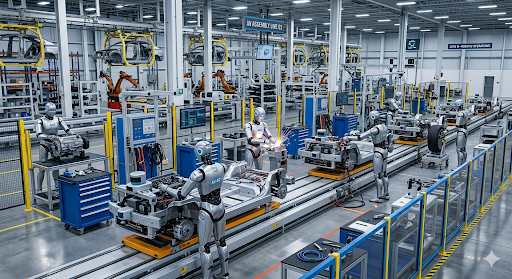
Software engineering is experiencing a rapid workflow evolution; physical AI and robotics are advancing rapidly in manufacturing, warehousing, and elder care; and robotaxis and automated trucks are moving from pilot programs toward commercial deployment in multiple U.S. metros.
This section summarizes the current state of AI and related technology in the context of the economy and labor market and provides tools and resources to help the reader understand and track the evolving interaction between artificial intelligence, technology, and labor.

Key Data Sources & Research
METR Time Horizons
metr.org - AI autonomous task capability benchmark; updated per model release
metr.org - AI autonomous task capability benchmark; updated per model release
Anthropic Economic Index
anthropic.com - Actual AI usage data by occupation; quarterly reports
anthropic.com - Actual AI usage data by occupation; quarterly reports
McKinsey Global Institute
mckinsey.com/mgi - AI adoption surveys, automation potential, workforce transition research
mckinsey.com/mgi - AI adoption surveys, automation potential, workforce transition research
Challenger, Gray & Christmas
challengergray.com - Monthly U.S. job cut reports with AI attribution tracking
challengergray.com - Monthly U.S. job cut reports with AI attribution tracking
Stanford Digital Economy Lab
digitaleconomy.stanford.edu - AI labor market research using ADP payroll data
digitaleconomy.stanford.edu - AI labor market research using ADP payroll data
Bureau of Labor Statistics
bls.gov - Occupational employment data, productivity statistics, job openings by sector
bls.gov - Occupational employment data, productivity statistics, job openings by sector